Health & Wellness
Oct 31, 2026
Testosterone Explained: Functions, Benefits and Its Role in the Human Body
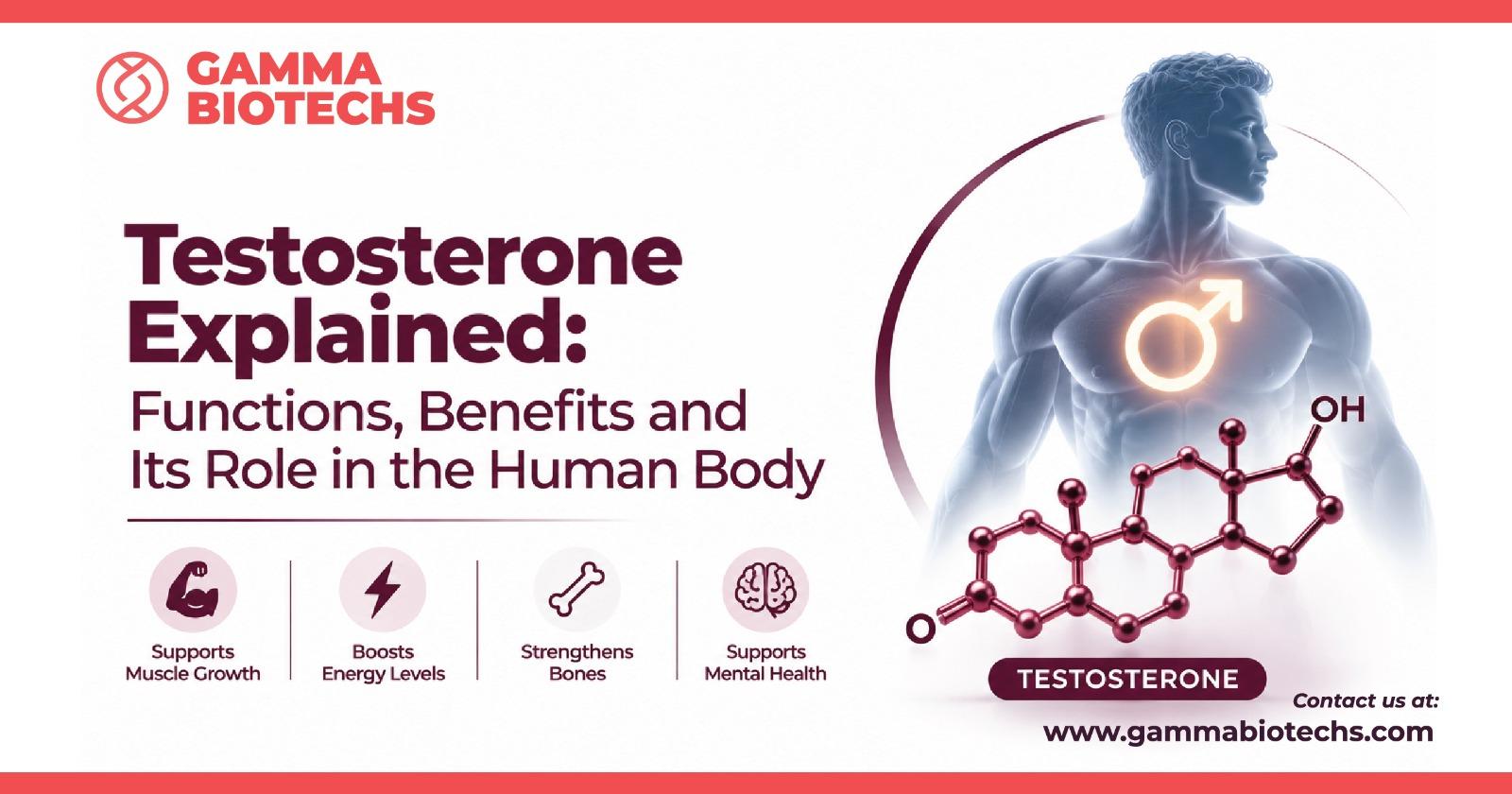
Testosterone is one of the most important hormones in the human body. Although it is commonly associated with male development, muscle growth and physical performance, its functions extend much further. It contributes to reproductive health, bone strength, red blood cell production, body composition, mood and several essential physiological processes.
Understanding testosterone requires looking beyond its association with bodybuilding and fitness. It is a naturally produced steroid hormone that plays a significant role in maintaining normal body functions in both men and women. Its production, regulation and effects are influenced by age, health, genetics and other hormonal signals.
This article explores what testosterone is, how the body produces it, its major functions, potential benefits and why maintaining balanced hormone levels is important for overall health.
1. What Is Testosterone?
Testosterone is a naturally occurring androgen, a type of steroid hormone responsible for regulating several reproductive and physical characteristics. It is produced primarily by the testes in males, while smaller amounts are produced by the ovaries and adrenal glands in females. In both sexes, testosterone contributes to normal physiological processes, although typical circulating concentrations differ considerably.
Chemically, testosterone belongs to the androgen group of hormones and is synthesized from cholesterol through a series of biochemical reactions. Its activity is not limited to reproductive organs. Testosterone interacts with androgen receptors in different tissues, including skeletal muscle, bones, skin and the central nervous system. These interactions influence gene expression and cellular activity, helping regulate the development and maintenance of various body functions.
Chemically, testosterone belongs to the androgen group of hormones and is synthesized from cholesterol through a series of biochemical reactions. Its activity is not limited to reproductive organs. Testosterone interacts with androgen receptors in different tissues, including skeletal muscle, bones, skin and the central nervous system. These interactions influence gene expression and cellular activity, helping regulate the development and maintenance of various body functions.
2. How Is Testosterone Produced in the Human Body?
Testosterone production is controlled by a hormonal communication system known as the hypothalamic-pituitary-gonadal (HPG) axis.
The process begins in the hypothalamus, a region of the brain that releases gonadotropin-releasing hormone (GnRH). This hormone signals the pituitary gland to release two important hormones: luteinizing hormone (LH) and follicle-stimulating hormone (FSH).
LH stimulates specialized Leydig cells in the testes to produce testosterone. Meanwhile, FSH works alongside testosterone to support sperm production through its actions on Sertoli cells.
Testosterone also participates in a negative feedback mechanism. When circulating levels increase, hormonal signals reduce GnRH and LH release, helping regulate further production. This feedback system maintains hormonal balance under normal physiological conditions.
3. Major Functions of Testosterone in the Human Body
Testosterone performs several interconnected functions throughout life. Its effects become particularly noticeable during puberty, but its physiological importance continues into adulthood.
3.1 Development of Male Reproductive Characteristics
During fetal development and puberty, testosterone and its active metabolite dihydrotestosterone (DHT) contribute to male reproductive development. Testosterone supports the development and maintenance of reproductive organs, while DHT has an important role in the development of external male genital characteristics.
During puberty, rising testosterone levels contribute to increased facial and body hair, a deeper voice, growth of reproductive organs and changes in body composition.
3.2 Muscle Growth and Protein Synthesis
One of testosterone's best-known physiological functions is its anabolic activity in skeletal muscle. Testosterone binds to androgen receptors in muscle tissue and influences gene expression associated with muscle protein synthesis.
This activity supports the development and maintenance of lean muscle mass. Testosterone also contributes to muscle strength and physical development, particularly when combined with appropriate nutrition and resistance exercise.
However, muscle growth depends on multiple factors, including training, protein intake, recovery, genetics and overall health. Testosterone is one part of a much larger biological process.
3.3 Bone Health and Mineral Density
Testosterone contributes to skeletal development and bone maintenance. It supports bone formation and helps maintain bone mineral density, partly through its conversion into estradiol by the enzyme aromatase.
Estradiol is particularly important for regulating bone turnover and preventing excessive bone breakdown in both men and women.
Insufficient sex hormone activity can negatively affect bone health over time, potentially increasing susceptibility to reduced bone density and osteoporosis.
3.4 Reproductive Health and Libido
Testosterone is essential for normal male reproductive function. It supports sperm production within the testes and contributes to sexual desire (libido).
In women, testosterone also contributes to sexual desire and other aspects of reproductive physiology, although its precise effects depend on hormonal interactions and individual biological differences.
4. Potential Benefits of Normal Testosterone Levels
Maintaining testosterone within an appropriate physiological range supports several important aspects of health.
- Physical development: Testosterone supports muscle maintenance, strength and normal body composition.
- Bone strength: Its interaction with bone metabolism helps maintain skeletal structure and mineral density.
- Sexual health: Adequate testosterone contributes to normal libido and reproductive function.
- Red blood cell production:** Testosterone stimulates erythropoiesis, the process through which the body produces red blood cells.
- Body composition: Testosterone influences the balance between lean muscle tissue and fat mass.
- General well-being: Hormonal balance contributes to normal energy regulation, mood and overall physiological function.
These benefits should not be interpreted as evidence that increasing testosterone above normal physiological levels automatically improves health or performance.
5. What Happens When Testosterone Levels Are Low?
Low testosterone, clinically known as male hypogonadism when associated with appropriate clinical findings, occurs when the body cannot produce sufficient testosterone.
Possible symptoms include reduced sexual desire, decreased spontaneous erections, fatigue, reduced muscle mass, increased body fat, low bone density and difficulties with concentration or mood.
Several factors can contribute to testosterone deficiency, including testicular disorders, pituitary or hypothalamic conditions, certain medications, obesity and some chronic illnesses.
Importantly, experiencing one or more of these symptoms does not automatically indicate low testosterone. Proper clinical assessment is necessary to identify the underlying cause.
6. Factors That Influence Testosterone Production
Testosterone levels can vary between individuals and throughout the day. Several biological and lifestyle factors influence its production.
- Age: Testosterone concentrations generally change throughout adulthood and may gradually decline with advancing age.
- Sleep: Sleep disturbances and inadequate sleep can influence hormonal regulation.
- Body composition: Obesity is associated with alterations in testosterone regulation.
- Physical activity: Regular exercise supports metabolic and hormonal health.
- Nutrition: Adequate energy intake and essential nutrients help maintain normal physiological functions.
- Medical conditions: Certain chronic diseases and endocrine disorders can affect testosterone production.
These factors demonstrate why testosterone levels should be understood within the broader context of individual health rather than considered in isolation.
7. Testosterone Testing and Clinical Evaluation
Testosterone levels are generally evaluated through blood testing. However, a single laboratory result is not always sufficient to establish a diagnosis.
According to the Endocrine Society, diagnosing male hypogonadism requires compatible symptoms or signs alongside consistently low testosterone concentrations. The assessment generally includes at least two separate early-morning, fasting total testosterone measurements using reliable laboratory methods.
Depending on the clinical situation, healthcare professionals may also evaluate free testosterone, luteinizing hormone, follicle-stimulating hormone and other relevant markers to investigate the underlying cause.
Accurate testing is important because testosterone concentrations can fluctuate with time of day, food intake, illness and other physiological factors.
8. Testosterone Therapy: Medical Considerations
Testosterone replacement therapy (TRT) is a medical treatment intended for individuals with appropriately diagnosed testosterone deficiency. It may be considered when clinical symptoms and laboratory findings support the diagnosis.
Treatment requires medical supervision, appropriate product selection and ongoing monitoring. Potential concerns include increased red blood cell concentration, suppression of natural sperm production, acne and other adverse effects.
Testosterone therapy is not a general-purpose solution for muscle development, athletic performance or age-related changes. It may also impair fertility, making medical assessment particularly important for individuals planning to have children.
The Endocrine Society recommends an individualized approach that considers potential benefits, risks and patient-specific medical circumstances.
9. Conclusion
Testosterone plays a central role in human physiology, influencing reproductive development, muscle maintenance, bone health, red blood cell production and several other biological functions. Its importance extends beyond physical appearance or athletic performance, making it an essential component of the body's hormonal regulation system.
Understanding how testosterone is produced, how it functions and what influences its levels provides a clearer perspective on endocrine health. Equally important is recognizing that hormonal balance matters more than simply achieving higher testosterone concentrations.
At Gamma Biotechs, scientific understanding and pharmaceutical knowledge are important parts of the broader healthcare and pharmaceutical industry. Continued awareness of hormone physiology, responsible medical practices and quality-focused pharmaceutical development helps support informed discussions about hormonal health.
Frequently Asked Questions (FAQs)
1. What is the main function of testosterone?
Testosterone primarily regulates male reproductive development and function. It also supports muscle growth, bone density, libido, red blood cell production and other physiological processes in both men and women.
2. Is testosterone produced naturally in women?
Yes. Women naturally produce testosterone in their ovaries and adrenal glands. Although concentrations are considerably lower than in men, the hormone contributes to sexual desire, bone health and normal physiological functions.
3. Does testosterone help increase muscle mass?
Yes. Testosterone supports muscle protein synthesis and contributes to the development and maintenance of lean muscle mass. However, muscle growth also depends on resistance training, nutrition, recovery and genetics.
4. How can testosterone levels be measured?
Testosterone is measured through a blood test. When deficiency is suspected, healthcare professionals generally recommend two separate early-morning measurements, interpreted alongside clinical symptoms and other relevant findings.
5. Does low testosterone always require treatment?
No. Treatment depends on the underlying cause, symptoms, laboratory findings and individual medical circumstances. A healthcare professional must determine whether treatment is appropriate after a proper clinical evaluation.
Medical Disclaimer: This article is intended for educational and informational purposes only. It does not replace professional medical advice, diagnosis or treatment. Hormonal testing and treatment decisions should always be guided by qualified healthcare professionals.